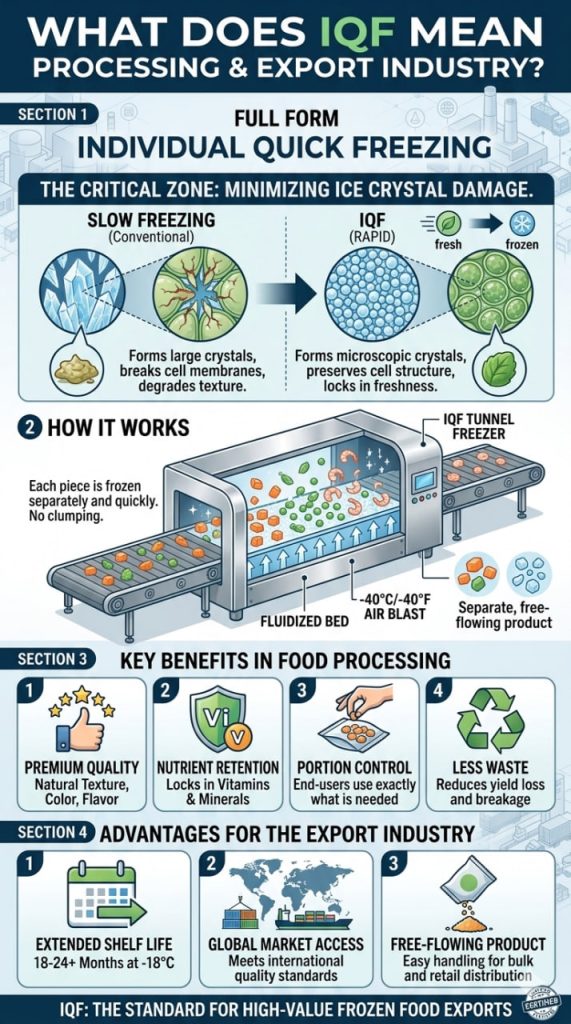
IQF stands for Individually Quick Frozen, a modern freezing technology widely used in the food processing and export industry. In this process, each fruit, vegetable, seafood, or food item is frozen separately at extremely low temperatures to preserve freshness, texture, taste, colour, and nutritional value.
Unlike traditional freezing methods where products stick together in large blocks, IQF technology keeps every piece individually frozen, making storage, packaging, and usage more convenient. IQF products also have a longer shelf life and maintain high quality during transportation and export.
IQF is commonly used for products like fruits, vegetables, shrimp, seafood, chicken, and even Ice Apple (Thati Munjulu). Exporters and food processing companies prefer IQF products because they remain fresh after thawing and are suitable for hotels, supermarkets, restaurants, and international markets.
Qezla Industries focuses on premium-quality agro and food products suitable for domestic supply and export standards.
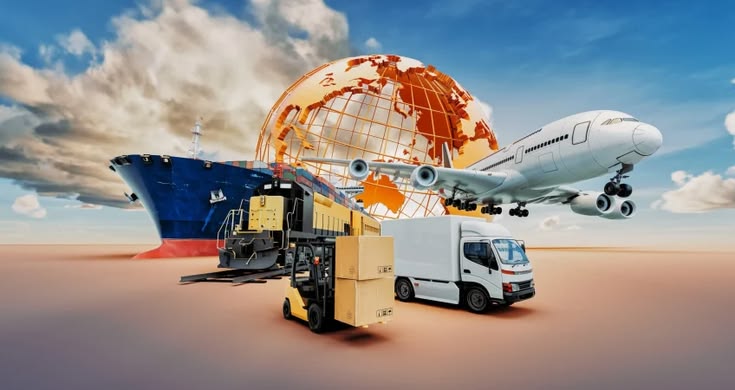
In international trade, payment security is one of the most important concerns for exporters. While many large transactions operate through Letters of Credit (LC), small and medium exporters often prefer flexible payment structures using FOB and FCR incoterms. These methods reduce banking costs, simplify operations, and speed up transactions, especially for repeat and trusted buyers.
However, exporters must structure payment terms carefully to avoid financial risk and shipment loss.
Why Many Exporters Avoid LC
Letters of Credit can be expensive, time-consuming, and heavily document-dependent. Many buyers also prefer simpler transactions instead of involving multiple banks.
As a result, exporters commonly operate under:
FOB (Free On Board)
FCR (Forwarder’s Cargo Receipt)
These incoterms are widely used in global trade for faster and more flexible shipping arrangements.
Common Payment Structure for First Orders
For first-time buyers, exporters usually follow safer payment terms such as:
30% advance payment or
USD 8,000 advance (whichever is lower)
The remaining balance is paid against:
Copy of Bill of Lading (B/L)
Draft B/L copy
This structure helps exporters secure partial payment before production and shipment while maintaining document control until final payment.
Understanding the Risk
Although payment against copy B/L is common, exporters must clearly understand one important point:
Shipment control is your protection.
If original shipping documents or telex release are provided before receiving full payment, the buyer may obtain cargo access while delaying or avoiding payment.
This creates significant financial risk for exporters.
Safer Export Practice
A safer structure is:
Recommended Terms
Advance payment before production/shipment
Balance payment against copy or draft B/L
Original B/L or telex release only after full payment confirmation
This allows exporters to maintain control over the shipment until payment is secured.
FOB vs FCR: Risk Difference
FOB Shipments
Under FOB sea shipments:
Original B/L provides cargo control
Exporter retains leverage until documents are released
Safer for payment collection
FCR Shipments
FCR transactions are generally riskier because:
Cargo may move without original B/L control
Freight forwarder documents provide less shipment security
Buyers may gain access faster
For FCR shipments, exporters often prefer:
Higher advance payments or
Full payment before cargo handover or document release
Best Practices for New Exporters
To reduce payment risk:
Verify buyer credibility
Start with small trial orders
Never release original documents before payment
Avoid unsecured credit terms for first orders
Clearly mention payment terms in Proforma Invoice and sales contracts
Conclusion
FOB and FCR transactions without LC are common in modern export business, especially among small and medium exporters. With proper document control and structured payment terms, exporters can safely operate international shipments while maintaining flexibility and faster transaction processing.
The key to safe exporting is simple: Maintain shipment control until payment is secured.
Starting an export business in India does not always require multiple certifications and complicated approvals. For many non-regulated product categories, businesses can begin exports with just an IEC (Import Export Code), basic shipping documents, and invoices.
If your products are non-food, non-medical, non-chemical, non-electronic, and non-hazardous, exporting can be much simpler and faster.
General Merchandise
These everyday utility products are widely traded internationally and are easy to start exporting:
Plastic household items
Buckets and containers
Kitchen items
Storage boxes
Packaging Materials
Packaging products have strong global demand due to growing industries and e-commerce markets.
Carton boxes
Paper bags
Packaging rolls
Bubble wrap
Textile Products
India remains one of the world’s leading textile suppliers. Basic textile products are among the easiest exports for beginners.
T-shirts
Cotton fabrics
Bedsheets
Towels
Non-branded garments
Handicrafts & Decor
Handmade and decorative products from India are popular in international markets.
Wooden crafts
Bamboo products
Artificial flowers
Home decor items
Industrial & Utility Items
Simple industrial goods are commonly exported without extensive approvals in many cases.
Hardware tools
Fasteners
Pipes
Basic machinery spare parts
Stationery & Office Supplies
Office and school supplies have consistent demand across global wholesale markets.
Notebooks
Pens
Files
Office accessories
Coir & Natural Fiber Products
Eco-friendly and sustainable products continue to see growing international demand.
Coir ropes
Door mats
Coco peat blocks
Usually No Extra Certification Needed
In many cases, exports are simpler if the products are:
Non-food
Non-medical
Non-chemical
Non-electronic
Non-hazardous
For such products, IEC, invoices, packing lists, and shipping documents are often enough to begin exporting.
Products to Avoid Initially Without Certifications
Some categories usually require additional approvals, testing, or certifications before export.
Food products
Cosmetics
Medicines
Chemicals
Batteries
Electronics
Toys (for some countries)
Medical devices
Easiest Export Categories for Beginners
New exporters often start with low-regulation products because they are easier for customs clearance and international shipping.
Recommended beginner-friendly export categories:
Packaging products
Textile items
Household goods
Handicrafts
Coir products
General utility products
These products are easier to source, pack, ship, and market internationally, making them ideal for businesses entering the export industry for the first time.